one moment
Digging through the crate…
one moment
Digging through the crate…
Every book is bound to another. Pull the thread.
featured syllabus
What is art's relationship to truth, power, and liberation under conditions of capitalism and technological reproduction? We begin with Martel to frame what is at stake. By starting with someone trying to reclaim rather than just diagnose the issue, the problem becomes a little easier to contextualize. Six blocks: Introduction; Foundations of art and the aesthetic experience; The crises of reproduction, commodification, and spectacle; Critical theory and aesthetics; Late capitalism and the postmodern condition; Contemporary condition — art after the internet and AI; with Kierkegaard as a supplement to Debord.
Reclaiming Art in the Age of Artifice
J. F. Martel
2015

Art as Experience
John Dewey
1934
Eye and Mind
Maurice Merleau-Ponty
1961
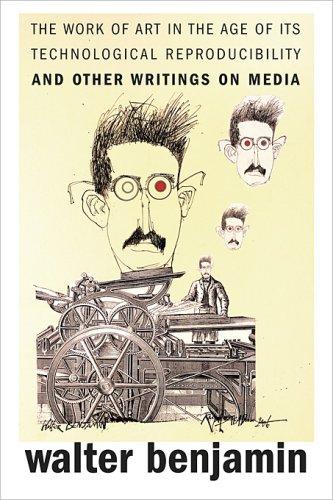
The Work of Art in the Age of Its Technological Reproducibility
Walter Benjamin
1935
Little History of Photography
Walter Benjamin
1931

Dialectic of Enlightenment
Theodor W. Adorno and Max Horkheimer
1944

On Photography
Susan Sontag
1977

Towards a Philosophy of Photography
Vilém Flusser
1983

Aesthetic Theory
Theodor W. Adorno
1970

The Aesthetic Dimension
Herbert Marcuse
1978
The Politics of Aesthetics
Jacques Rancière
2000
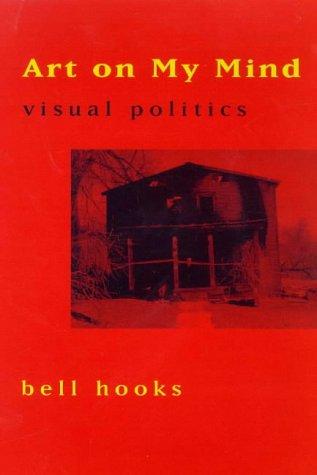
Art on My Mind
bell hooks
1995
Society of the Spectacle
Guy Debord
1967

Simulacra and Simulation
Jean Baudrillard
1981

Postmodernism, or, The Cultural Logic of Late Capitalism
Fredric Jameson
1991
Saving Beauty
Byung-Chul Han
2015

Duty Free Art
Hito Steyerl
2017

Art and Cosmotechnics
Yuk Hui
2021

The Present Age
Søren Kierkegaard
1846
if you liked
Augustine
1482
We read Plotinus in this group, and the Christian God really does look like the One. What's missing is that the One doesn't look back. It's amoral, nothing is at stake in it, and contemplating it doesn't change how you live. Augustine's move is to keep the whole apparatus and add stakes.
you’d like
Plotinus
1964
if you liked
Anonymous
This lawyering of the divine — and we saw it throughout Genesis and Exodus, Jacob testing his brothers, the Israelites finding workarounds, Pharisees tithing mint and dill while ignoring mercy — seems like the very substrate Jesus is working against. We arrived at Paul's letters carrying the thread from Jeremiah: a holy law the people could not keep, and the promise that the covenant would one day be written on the hearts of men.
you’d like
Anonymous
1985
if you liked
Plutarch
1870
This moment in Roman history — the transition from Republic to Empire — looks like a lived-out version of Plato's assertion that all democracy degrades into tyranny through the corruption of souls.
the rotating shelf
you’d like
Plato
2008